
The wildFIRE Lab team is led by Director and founder Professor Claire M. Belcher. Our current team is 8 strong but is always evolving like our research and work, however our core team are:
Director and Founder – Professor Claire M. Belcher
Assistant Director – Dr Sarah J. Baker
Communications Curator and Project analyst – Romy C. Franz Bodenham
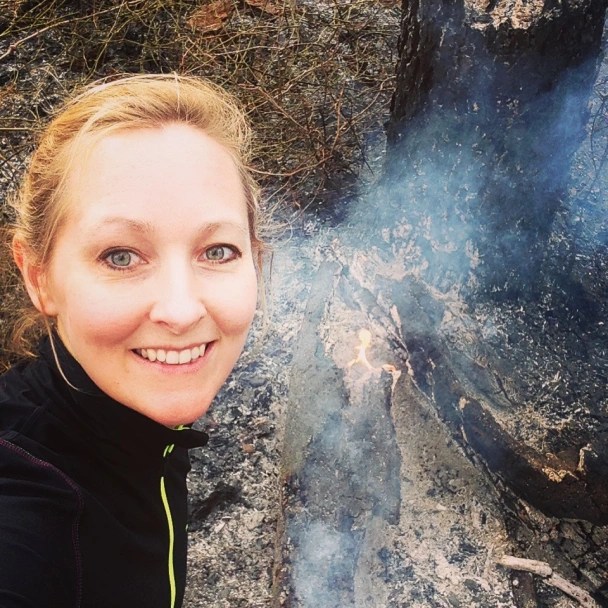
Prof Claire M. Belcher
Professor Claire M. BelcherClaire is a Professor of wildland fire. She founded the experimental wildFIRE Lab at the University of Exeter in 2012 where it has gained an international reputation for wildfire research. Claire is passionate about understanding the ecology of fire and how fire has shaped the evolutionary history of plants since their appearance on Earth over 300 million years ago. In recent years, her research has turned to a focus on UK fire prone ecosystems, driven by the need to understand fire risk, fire behaviour and fire effects on biodiversity in heathlands and moorlands. She has been an instrumental member of the team building the UKs first fire behaviour prediction tool fireinsite.org and seeks to work with land owners, stake holders and government to ensure the UKs heathlands and moorlands are resilient and pyro-diverse
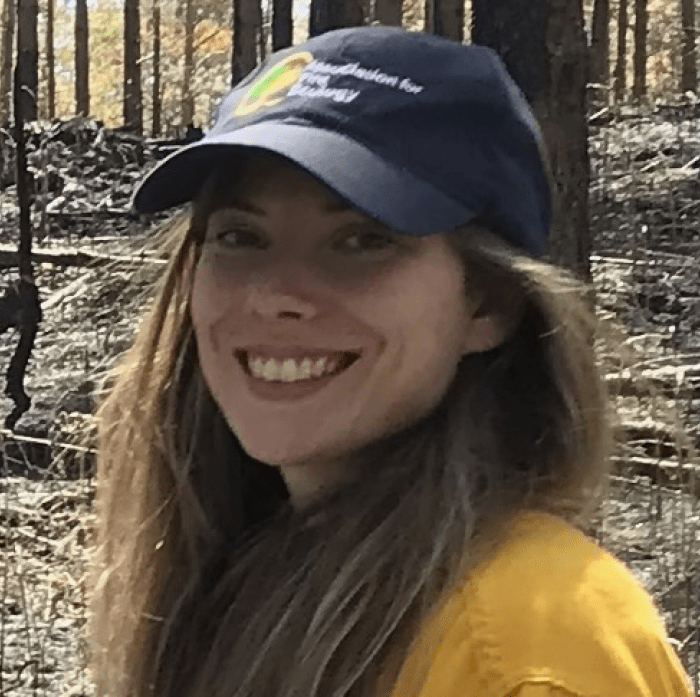
Dr Sarah J. Baker
Sarah is an Earth scientist with a passion for understanding wildfires—past and present. My journey into wildfire research began with palaeo-fire studies, exploring how ancient wildfires influenced the Earth system and what the fossil fire record reveals about the drivers of fire behaviour and frequency over time.
In recent years, my focus has shifted to modern fire activity, particularly within the UK. I’m especially interested in the flammability properties of UK vegetation, both with respect to wildfire and management burns, and this has led me to become a part of the team compiling this national database of plant specie and assessing their traits and responses to fire.

Romy C. Franz Bodenham, Bsc
Romy is a recent graduate from the University of Exeter, where she studied BSc. Geography including Fire Ecology and Fire Management. She is currently developing ecological field mapping tools to aid the collate and manage spatial biodiversity data.
She is passionate about hazard management, biodiversity monitoring, and conservation, with a strong interest in how ecosystems respond to environmental change. She currently supports our research group focused on wildfire ecology, contributing to projects that investigate plant traits, fire resilience, and the role of fire in habitat management. She hopes to help inform strategies for conserving biodiversity and building more sustainable landscapes.
Research Fellows and Associates

Dr Alastair J. Crawford
Alastair is an environmental scientist specialising in fire, who first joined the University of Exeter’s wildFIRE lab as a postgraduate student in 2012. After completing a PhD on methods used to interpret the fossil record of wildfire, he later returned as a postdoctoral researcher, studying the application of charcoal analyses to determine fire severity, and working on calorimetric analysis of peat flammability. He worked as Research Technician on the project ‘Toward a UK fire danger rating system’, studying vegetation flammability and developing fuel models for fire behaviour prediction. For IDEAL UK Fire he has provided field- and lab-based technical support, including the assessment of pyrogenic soil carbon.
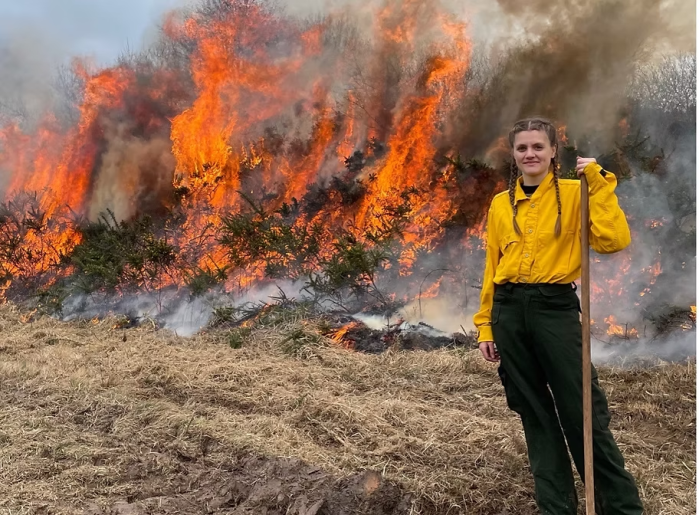
Dr Rayanne Vitali
Rayanne Vitali is a Postdoctoral Researcher at the University of Exeter working on the interactions between vegetation, fire, and carbon dynamics across different spatial and temporal scales. Her work uses a range of modelling approaches to understand how fire, vegetation, and carbon dynamics shape one another through feedbacks within the Earth system, from deep-time questions such as fire’s role in regulating atmospheric oxygen, to modern high-latitude fire regimes and their impacts on carbon storage under climate change. Whilst primarily based in modelling, she has also taken part in UK-based fire field campaigns, occasionally stepping out from behind the computer to engage directly with fire-affected landscapes.
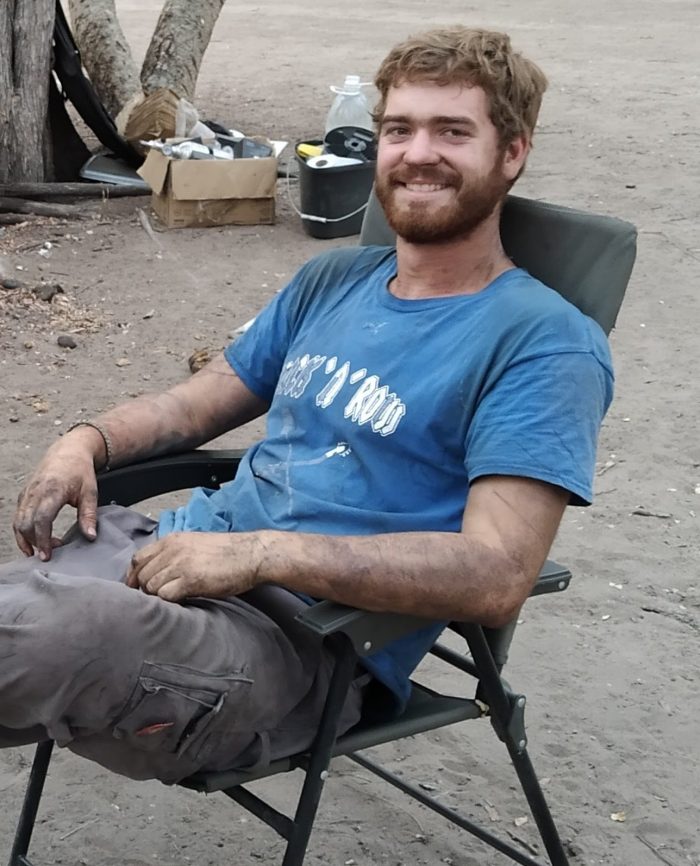
Dr Tom Eames
Tom is a post-doctoral research fellow working on the ESA-funded Xfires project, which aims to better understand the phenomenon of ‘extreme’ wildfires, particularly in relation to their effect on our climate. Within this project Tom is looking at how emissions from these fires might impact our climate, with a particular emphasis on high-altitude aerosol emissions.
Tom completed his PhD at the Free University Amsterdam, where he also worked on wildfire emissions and their interaction with global climate. There, he participated in several field campaigns gathering data on the type of vegetation burned and chemical species emitted by fires in southern African savannahs. In particular, he looked at how this data can help us understand what different fire management choices might mean for our climate.
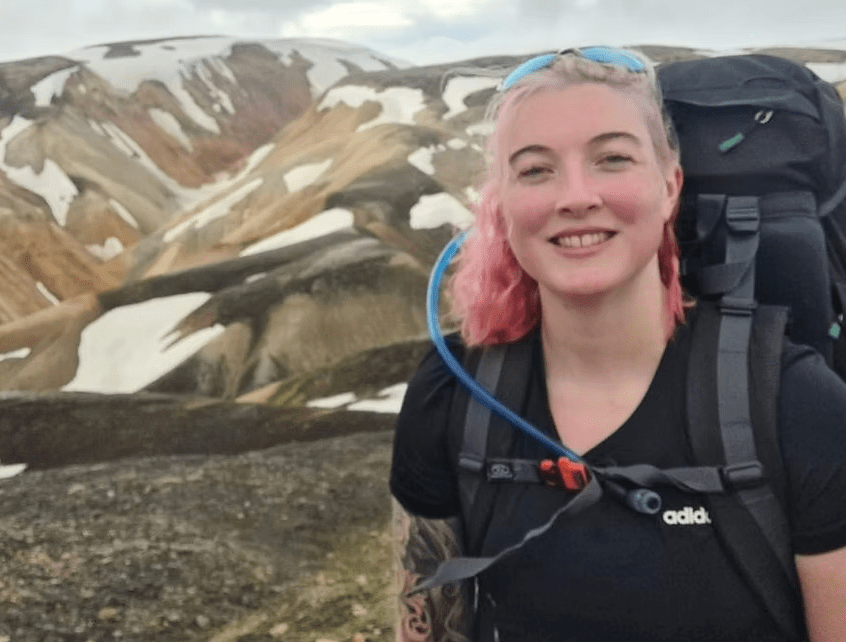
Dr Kerryn Little
Kerryn is a postdoctoral researcher at the University of Birmingham and works with the Exeter wildFIRE Lab team. She started her fire career as a rural volunteer with Fire and Emergency New Zealand before moving to the UK to complete a PhD in Geography as part of the European ITN ‘PyroLife’ and a Postdoc with the NERC highlight project UKFDRS ‘toward a UK fire danger rating system’. Kerryn has also been a member of the Board of Directors for the International Association of Wildland Fire since 2025. Kerryn’s research focuses on understanding the interacting controls on wildfire danger across spatiotemporal scales, from large-scale atmospheric circulation drivers to vegetation responses that govern live fuel moisture and flammability. Her aim is to improve our ability to forecast wildfire danger, especially in emerging fire prone regions like the UK that lack operational tools to support decision making. Kerryn supports the management of the IDEAL project.
Research Students

Zahra Mousavi
Zahra has a background in engineering, with experience in remote sensing and GIS, and a strong interest in applying data-driven approaches to environmental challenges. Her work focuses on wildfire modelling, with particular emphasis on how landscape management strategies influence fire behaviour and fire risk. Since beginning her PhD, she has been developing and applying spatial data analysis, AI-based methods, and computational modelling tools to better understand fire dynamics and evaluate potential land-management mitigation strategies. Her research aims to support more informed decision-making by identifying practical approaches to vegetation management and landscape-scale fire risk reduction.
Zahra is particularly interested in developing robust, evidence-based methods that can be translated into real-world applications. This includes the use of geospatial technologies and simulation frameworks to assess how different management interventions perform under varying environmental conditions.
Ben Phillipson – Simple Operational Flame Length Maps for Moorland Fuels
Green Smith – Smoke Stimulation in UK Heathland Plants
Andy Elliott – Understanding ignitions of wildfires in UK fuels
 wildFIRE Lab